logo

EbookBell.com

Most ebook files are in PDF format, so you can easily read them using various software such as Foxit Reader or directly on the Google Chrome browser.
Some ebook files are released by publishers in other formats such as .awz, .mobi, .epub, .fb2, etc. You may need to install specific software to read these formats on mobile/PC, such as Calibre.

Please read the tutorial at this link:  https://ebookbell.com/faq 


We offer FREE conversion to the popular formats you request; however, this may take some time. Therefore, right after payment, please email us, and we will try to provide the service as quickly as possible.


For some exceptional file formats or broken links (if any), please refrain from opening any disputes. Instead, email us first, and we will try to assist within a maximum of 6 hours.

EbookBell Team
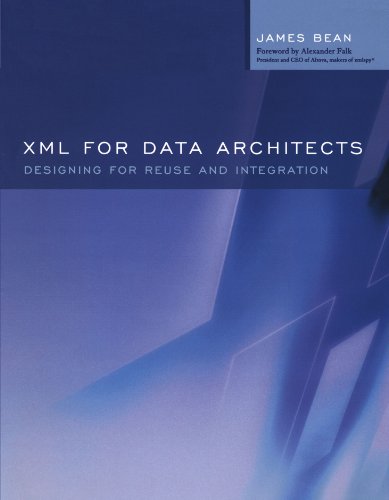
Xml For Data Architects Designing For Reuse And Integration 1st Edition James Bean

  • SKU: BELL-973176
Xml For Data Architects Designing For Reuse And Integration 1st Edition James Bean
$ 35.00 $ 45.00 (-22%)

5.0

98 reviews

Xml For Data Architects Designing For Reuse And Integration 1st Edition James Bean instant download after payment.

Publisher: Morgan Kaufmann
File Extension: CHM
File size: 11.27 MB
Pages: 270
Author: James Bean
ISBN: 9780080521435, 9781558609075, 0080521436, 1558609075
Language: English
Year: 2003
Edition: 1

Product desciption

Xml For Data Architects Designing For Reuse And Integration 1st Edition James Bean by James Bean 9780080521435, 9781558609075, 0080521436, 1558609075 instant download after payment.

XML is a tremendous enabler for platform agnostic data and metadata exchanges. However, there are no clear processes and techniques specifically focused on the engineering of XML structures to support reuse and integration simplicity, which are of particular importance in the age of application integration and Web services. This book describes the challenges of using XML in a manner that promotes simplification of integration, and a high degree of schema reuse. It also describes the syntactical capabilities of XML and XML Schemas, and the similarities (and in some cases limitations) of XML DTDs. This book presents combinations of architectural and design approaches to using XML as well as numerous syntactical and working examples.Designed to be read three different ways: skim the margin notes for quick information, or use tables in the appendix to locate sections relevant the to a particular issue, or read cover-to-cover for the in-depth treatment. Contains numerous tables that describe datatypes supported by the most common DBMSs and map to XML Schema supported data types. Unique focus on the value added role and processes of the data architect as they apply to enterprise use of XML.

Related Products