logo

EbookBell.com

Most ebook files are in PDF format, so you can easily read them using various software such as Foxit Reader or directly on the Google Chrome browser.
Some ebook files are released by publishers in other formats such as .awz, .mobi, .epub, .fb2, etc. You may need to install specific software to read these formats on mobile/PC, such as Calibre.

Please read the tutorial at this link:  https://ebookbell.com/faq 


We offer FREE conversion to the popular formats you request; however, this may take some time. Therefore, right after payment, please email us, and we will try to provide the service as quickly as possible.


For some exceptional file formats or broken links (if any), please refrain from opening any disputes. Instead, email us first, and we will try to assist within a maximum of 6 hours.

EbookBell Team
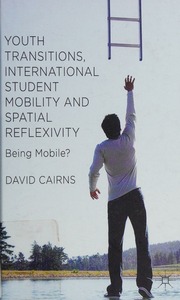
Youth Transitions International Student Mobility And Spatial Reflexivity Being Mobile Cairns

  • SKU: BELL-238855620
Youth Transitions International Student Mobility And Spatial Reflexivity Being Mobile Cairns
$ 35.00 $ 45.00 (-22%)

0.0

0 reviews

Youth Transitions International Student Mobility And Spatial Reflexivity Being Mobile Cairns instant download after payment.

Publisher: Houndmills, Basingstoke, Hampshire ; New York, NY : Palgrave Macmillan
File Extension: PDF
File size: 8.93 MB
Author: Cairns, David
Language: English
Year: 2014

Product desciption

Youth Transitions International Student Mobility And Spatial Reflexivity Being Mobile Cairns by Cairns, David instant download after payment.

xii, 149 pages ; 23 cm, \"International Student Mobility is vital to the future of Europe: the circulation of tertiary-educated youth between Member States represents a means through which the European Union can avoid a massive wastage of talent and, simultaneously, enable its skilled and qualified young people to make the best of their abilities. This book explores this topic in three contemporary European contexts: Portugal, the Republic of Ireland and the United Kingdom. A critique of existing theoretical perspectives on student mobility leads to the introduction of the concept of spatial reflexivity, denoting the process through which mobility plans are formulated among those making the transition to adulthood. However, while the findings from the three studies indicate that there is a huge level of interest in the idea of moving abroad for the next educational or occupational step actual prospects for being mobile appear more restricted, often leaving mobility tantalizingly out of reach. This disparity is explained by a range of factors, including the impact of the global financial crisis and the importance of family and social networks in encouraging and inhibiting transnational movement, in addition to insufficient policy recognition of the mobility needs of tertiary-educated youth outside the main metropolitan centres of Europe\"--, Includes bibliographical references (p. 134-146), Machine generated contents note: -- 1. Introduction2. Mobile Being3. Becoming Mobile4. The Mobility Promise5. A Mobile Future?