Most ebook files are in PDF format, so you can easily read them using various software such as Foxit Reader or directly on the Google Chrome browser.
Some ebook files are released by publishers in other formats such as .awz, .mobi, .epub, .fb2, etc. You may need to install specific software to read these formats on mobile/PC, such as Calibre.
Please read the tutorial at this link: https://ebookbell.com/faq
We offer FREE conversion to the popular formats you request; however, this may take some time. Therefore, right after payment, please email us, and we will try to provide the service as quickly as possible.
For some exceptional file formats or broken links (if any), please refrain from opening any disputes. Instead, email us first, and we will try to assist within a maximum of 6 hours.
EbookBell Team
4.3
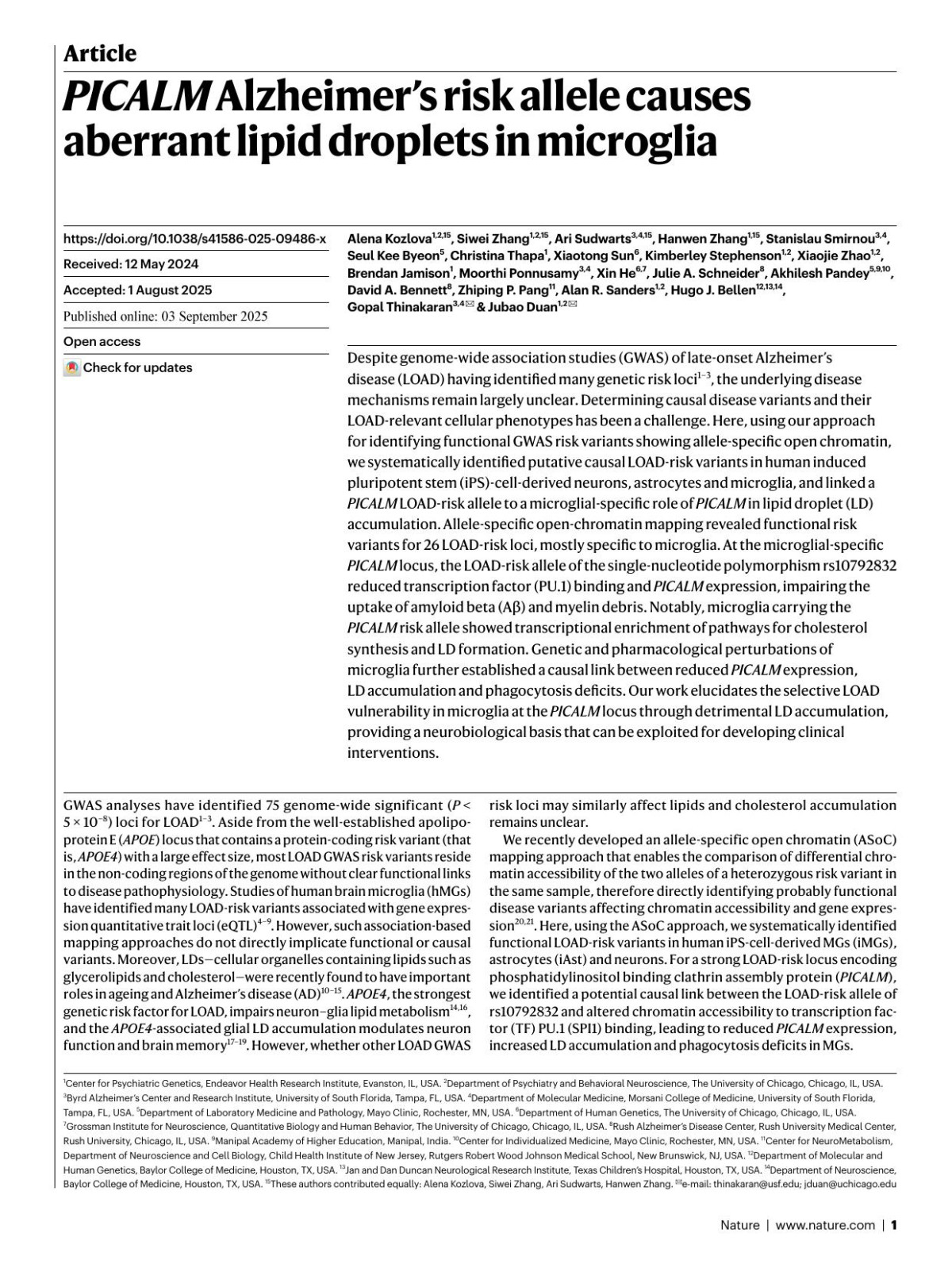
68 reviewsDespite genome-wide association studies (GWAS) of late-onset Alzheimer’s disease (LOAD) having identifed many genetic risk loci1–3, the underlying disease mechanisms remain largely unclear. Determining causal disease variants and their LOAD-relevant cellular phenotypes has been a challenge. Here, using our approach for identifying functional GWAS risk variants showing allele-specifc open chromatin, we systematically identifed putative causal LOAD-risk variants in human induced pluripotent stem (iPS)-cell-derived neurons, astrocytes and microglia, and linked a PICALM LOAD-risk allele to a microglial-specifc role of PICALM in lipid droplet (LD) accumulation. Allele-specifc open-chromatin mapping revealed functional risk variants for 26 LOAD-risk loci, mostly specifc to microglia. At the microglial-specifc PICALM locus, the LOAD-risk allele of the single-nucleotide polymorphism rs10792832 reduced transcription factor (PU.1) binding and PICALM expression, impairing the uptake of amyloid beta (Aβ) and myelin debris. Notably, microglia carrying the PICALM risk allele showed transcriptional enrichment of pathways for cholesterol synthesis and LD formation. Genetic and pharmacological perturbations of microglia further established a causal link between reduced PICALM expression, LD accumulation and phagocytosis defcits. Our work elucidates the selective LOAD vulnerability in microglia at the PICALM locus through detrimental LD accumulation, providing a neurobiological basis that can be exploited for developing clinical interventions.