logo

EbookBell.com

Most ebook files are in PDF format, so you can easily read them using various software such as Foxit Reader or directly on the Google Chrome browser.
Some ebook files are released by publishers in other formats such as .awz, .mobi, .epub, .fb2, etc. You may need to install specific software to read these formats on mobile/PC, such as Calibre.

Please read the tutorial at this link:  https://ebookbell.com/faq 


We offer FREE conversion to the popular formats you request; however, this may take some time. Therefore, right after payment, please email us, and we will try to provide the service as quickly as possible.


For some exceptional file formats or broken links (if any), please refrain from opening any disputes. Instead, email us first, and we will try to assist within a maximum of 6 hours.

EbookBell Team
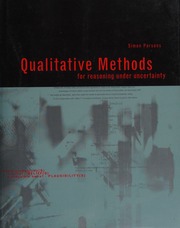
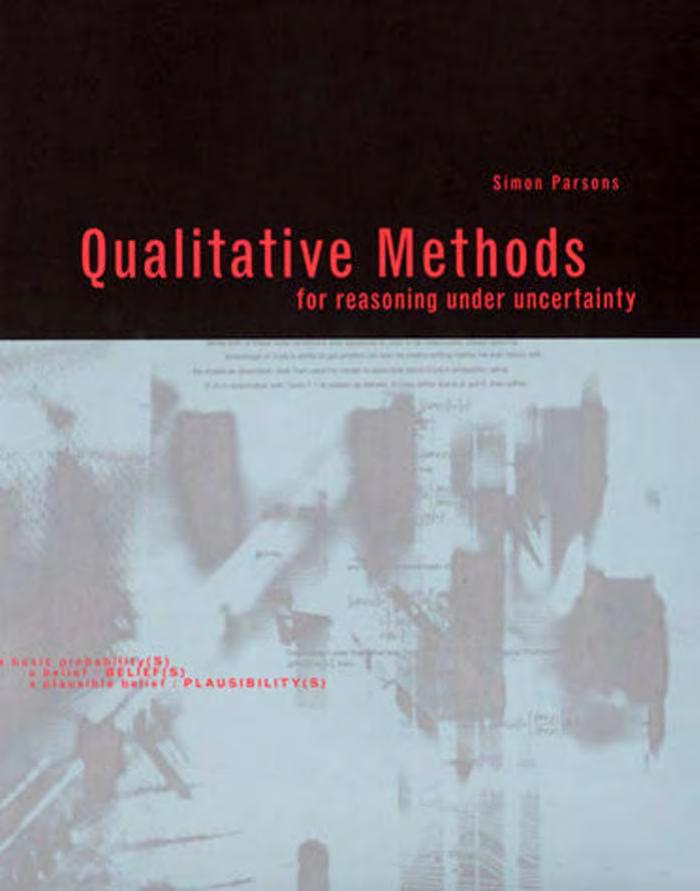
Qualitative Methods For Reasoning Under Uncertainty Parsons Simon

  • SKU: BELL-238140204
Qualitative Methods For Reasoning Under Uncertainty Parsons Simon
$ 35.00 $ 45.00 (-22%)

4.0

6 reviews

Qualitative Methods For Reasoning Under Uncertainty Parsons Simon instant download after payment.

Publisher: Cambridge, Mass. : MIT Press
File Extension: PDF
File size: 19.72 MB
Author: Parsons, Simon
Language: English
Year: 2001

Product desciption

Qualitative Methods For Reasoning Under Uncertainty Parsons Simon by Parsons, Simon instant download after payment.

1 online resource (xviii, 506 pages) :, In this book Simon Parsons describes qualitative methods for reasoning under uncertainty, \"uncertainty\" being a catch-all term for various types of imperfect information. The advantage of qualitative methods is that they do not require precise numerical information. Instead, they work with abstractions such as interval values and information about how values change. The author does not invent completely new methods for reasoning under uncertainty but provides the means to create qualitative versions of existing methods. To illustrate this, he develops qualitative versions of probability theory, possibility theory, and the Dempster-Shafer theory of evidence. According to Parsons, these theories are best considered complementary rather than exclusive. Thus the book supports the contention that rather than search for the one best method to handle all imperfect information, one should use whichever method best fits the problem. This approach leads naturally to the use of several different methods in the solution of a single problem and to the complexity of integrating the results--a problem to which qualitative methods provide a solution, Includes bibliographical references (pages 457-497) and index, Print version record

Related Products