Most ebook files are in PDF format, so you can easily read them using various software such as Foxit Reader or directly on the Google Chrome browser.
Some ebook files are released by publishers in other formats such as .awz, .mobi, .epub, .fb2, etc. You may need to install specific software to read these formats on mobile/PC, such as Calibre.
Please read the tutorial at this link: https://ebookbell.com/faq
We offer FREE conversion to the popular formats you request; however, this may take some time. Therefore, right after payment, please email us, and we will try to provide the service as quickly as possible.
For some exceptional file formats or broken links (if any), please refrain from opening any disputes. Instead, email us first, and we will try to assist within a maximum of 6 hours.
EbookBell Team
0.0
0 reviews
ISBN 10: 6613682322
ISBN 13: 9786613682321
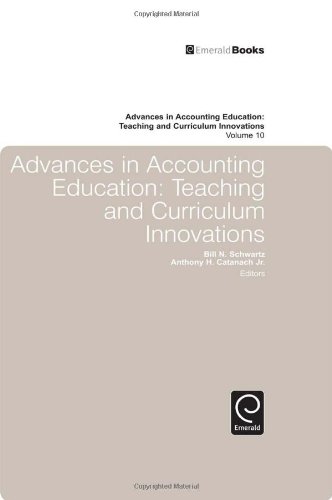
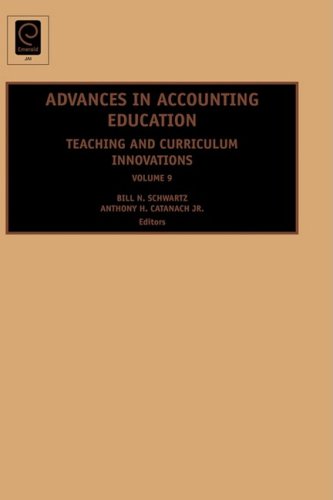
Author: Bill N. Schwartz, Anthony H. Catanach
Advances in Accounting Education is a refereed, academic research annual whose purpose is to help meet the needs of faculty members interested in ways to improve their classroom instruction. We publish thoughtful, well-developed articles that are readable, relevant and reliable. Articles may be either empirical or non-empirical. They emphasize pedagogy, i.e., explaining how faculty members can improve their teaching methods or how accounting units can improve their curricula/programs
Chapter 1: Teaching the Income Statement: Framing the Discussion within the Context of Earnings Quality
Chapter 2: A New Approach to Improving and Evaluating Student Workplace Writing Skills
Chapter 3: Integrating Tax and Financial Accounting: Three Exercises for Use in Tax and Financial Accounting Classes
Chapter 4: Using SEC Enforcement Releases to Teach Auditing and Ethics-Related Concepts
Chapter 5: Groupthink in Accounting Education
Chapter 6: The Effect of Fraud Triangle Factors on Students' Cheating Behaviors
Chapter 7: Current Factors and Practices Related to Instructional Approach in the Introductory Financial Accounting Course
Chapter 8: Does Ethics Instruction Make a Difference?
Chapter 9: Using the Albrecht and Sack Study to Guide Curriculum Decisions
Chapter 10: Using a Technology-Mediated Approach to Create a Practice-Feedback-Interaction Process for Use with Accounting Courses
Chapter 11: Student Turned Consultant: Teaching the Balanced Scorecard Using Experiential Learning
Chapter 12: A Preliminary Study of Learning Objectives across the Curriculum: An Analysis of Various Accounting Textbooks
Chapter 13: Tax Software versus Paper Return: The Effect of a Computerized Decision Aid on Cognitive Effort and Student Learning
Chapter 14: Revisiting Hiring Decisions by Public Accounting: The Impact of Educational Path, Age and Gender
Chapter 15: Learning to Interpret and Reconcile Tax Authority
advances in accounting submission
advances in accounting behavioral research
basic accounting education
advances in accounting conference
how to study advanced accounting
Tags: Bill Schwartz, Anthony Catanach, Advances, Accounting