Most ebook files are in PDF format, so you can easily read them using various software such as Foxit Reader or directly on the Google Chrome browser.
Some ebook files are released by publishers in other formats such as .awz, .mobi, .epub, .fb2, etc. You may need to install specific software to read these formats on mobile/PC, such as Calibre.
Please read the tutorial at this link: https://ebookbell.com/faq
We offer FREE conversion to the popular formats you request; however, this may take some time. Therefore, right after payment, please email us, and we will try to provide the service as quickly as possible.
For some exceptional file formats or broken links (if any), please refrain from opening any disputes. Instead, email us first, and we will try to assist within a maximum of 6 hours.
EbookBell Team
0.0
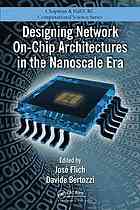
0 reviews"Chip Multiprocessors (CMPs) are diving very aggressively into the marketplace since past efforts to speed up processor architectures in ways that do not modify the basic von Neumann computing model have encountered hard limits. The power consumption of the chip becomes the limiting factor and sets the rules for future CMP systems. As a result, the microprocessor industry is today leading the development of multicore and many-core architectures where, as the number of cores increases, efficient communication among them and with off-chip resources becomes key to achieve the intended performance scalability. This trend has helped overcome the skepticism of some system architects to embrace on-chip interconnection networks as a key enabler for effective system integration. Networks-on-chip (NoCs) make performance scalability more a matter of instantiation and connectivity rather than increasing complexity of specific architecture building blocks. This book comes as a timely and welcome addition to the wide spectrum of available NoC literature, as it has been designed with the purpose of describing in a coherent and well-grounded fashion the foundation of NoC technology, above and beyond a simple overview of research ideas and/or design experiences. It covers in depth architectural and implementation concepts and gives clear guidelines on how to design the key network component, providing strong guidance in a research field that is starting to stabilize, bringing "sense and simplicity" and teaching hard lessons from the design trenches. The book also covers upcoming research and development trends, such as vertical integration and variation tolerant design. It is a much needed "how-to" guide and an ideal stepping stone for the next ten years of NoC evolution.