logo

EbookBell.com

Most ebook files are in PDF format, so you can easily read them using various software such as Foxit Reader or directly on the Google Chrome browser.
Some ebook files are released by publishers in other formats such as .awz, .mobi, .epub, .fb2, etc. You may need to install specific software to read these formats on mobile/PC, such as Calibre.

Please read the tutorial at this link:  https://ebookbell.com/faq 


We offer FREE conversion to the popular formats you request; however, this may take some time. Therefore, right after payment, please email us, and we will try to provide the service as quickly as possible.


For some exceptional file formats or broken links (if any), please refrain from opening any disputes. Instead, email us first, and we will try to assist within a maximum of 6 hours.

EbookBell Team
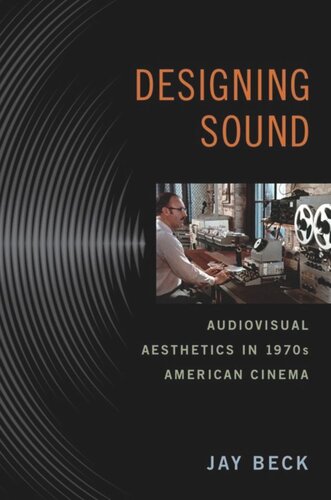
Designing Sound Audiovisual Aesthetics In 1970s American Cinema Paperback Jay Beck

  • SKU: BELL-7279044
Designing Sound Audiovisual Aesthetics In 1970s American Cinema Paperback Jay Beck
$ 35.00 $ 45.00 (-22%)

4.0

26 reviews

Designing Sound Audiovisual Aesthetics In 1970s American Cinema Paperback Jay Beck instant download after payment.

Publisher: Rutgers University Press
File Extension: PDF
File size: 5.55 MB
Pages: 274
Author: Jay Beck
ISBN: 9780813564135, 0813564131
Language: English
Year: 2016
Edition: Paperback

Product desciption

Designing Sound Audiovisual Aesthetics In 1970s American Cinema Paperback Jay Beck by Jay Beck 9780813564135, 0813564131 instant download after payment.

The late 1960s and 1970s are widely recognized as a golden age for American film, as directors like Francis Ford Coppola, George Lucas, and Martin Scorsese expanded the Hollywood model with aesthetically innovative works. As this groundbreaking new study reveals, those filmmakers were blessed with more than just visionary eyes;Designing Soundfocuses on how those filmmakers also had keen ears that enabled them to perceive new possibilities for cinematic sound design.   Offering detailed case studies of key films and filmmakers, Jay Beck explores how sound design was central to the era’s experimentation with new modes of cinematic storytelling. He demonstrates how sound was key to many directors’ signature aesthetics, from the overlapping dialogue that contributes to Robert Altman’s naturalism to the wordless interludes at the heart of Terrence Malick’s lyricism. Yet the book also examines sound design as a collaborative process, one where certain key directors ceded authority to sound technicians who offered significant creative input.    
Designing Soundprovides readers with a fresh take on a much-studied era in American film, giving a new appreciation of how artistry emerged from a period of rapid industrial and technological change. Filled with rich behind-the-scenes details, the book vividly conveys how sound practices developed by 1970s filmmakers changed the course of American cinema.  

Related Products