Product desciption
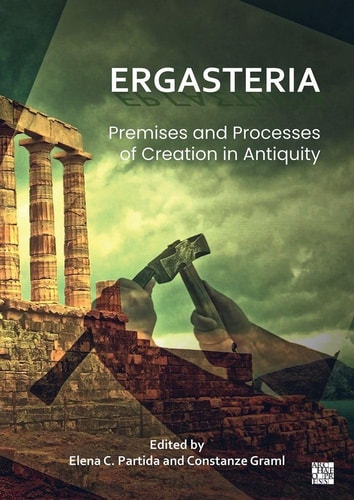
Ergasteria Elena C Partida Constanze Graml by Elena C. Partida, Constanze Graml 9781803278261, 9781803278254, 1803278269, 1803278250 instant download after payment.
Ergasteria offers insights into aspects of creation, manufacture and processing in antiquity, viewing craftsmen and artists in their socio-cultural and geopolitical setting. New finds from Greece, North Africa, the Black Sea, Italy and Central Europe provide a trigger for discussion. Bronze foundries for life-size statues were the birthplace of proportions and harmony which imbued the perception of beauty, but could also be a source of nuisance. The mastery of modelling in any material evolved from coping with constraints in the course of manufacture, and craftsmen invented ways of overcoming obstacles. Polyvalent ateliers suggest the artisans' adaptability, in addition to their specialisation. An investigation of the first step in the process, namely the extraction of material, reveals that quarries were manned with a specialised workforce (stonecutters, sculptors) who carved the marble volumes to an advanced stage, prior to their refinement. Meticulous preparation was also crucial in the field of logistics, particularly in large-scale public works, such as temples or fortifications. Interaction of artists with architects and the workforce in general can be primarily observed in sanctuaries, which became open-air workshops of stonemasons, carpenters etc. Accordingly, part of the book is devoted to construction-sites, the mobility of craftspeople who propelled the diffusion of knowledge, and the range of practices employed in individual settings thereby allowing us to grasp both the diversity of artistic expression and the composite population that it may reflect. The mountainous, littoral, urban or suburban space in which manufacturing took place is also taken into account, along with the socio-historical context, which had an impact upon artisans, as politics and military coalitions could instigate or disrupt a creative process. Cases of adaptive reuse are evaluated from the viewpoint of aesthetics, ergonomics, managerial issues concerning spolia, and the…