Most ebook files are in PDF format, so you can easily read them using various software such as Foxit Reader or directly on the Google Chrome browser.
Some ebook files are released by publishers in other formats such as .awz, .mobi, .epub, .fb2, etc. You may need to install specific software to read these formats on mobile/PC, such as Calibre.
Please read the tutorial at this link: https://ebookbell.com/faq
We offer FREE conversion to the popular formats you request; however, this may take some time. Therefore, right after payment, please email us, and we will try to provide the service as quickly as possible.
For some exceptional file formats or broken links (if any), please refrain from opening any disputes. Instead, email us first, and we will try to assist within a maximum of 6 hours.
EbookBell Team
4.8
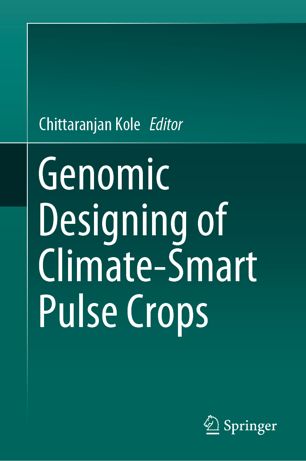
64 reviewsThis book describes the concepts, strategies and techniques for pulse-crop improvement in the era of climate change, highlighting the latest advances in plant molecular mapping and genome sequencing.
Genetic mapping of genes and QTLs has broadened the scope of marker-assisted breeding and map-based cloning in almost all major pulse crops. Genetic transformation, particularly using alien genes conferring resistance to herbicide, insects and diseases has facilitated the development of a huge number of genetically modified varieties of the major pulse crops. Since the genome sequencing of rice in 2002, genomes of over 7 pulse crops have been sequenced. This has resulted in the possibility of deciphering the exact nucleotide sequence and chromosomal positions of agroeconomic genes. Most importantly, comparative genomics and genotyping-by-sequencing has opened up a new vista for exploring wild crop relatives for identification of useful donor genes.