logo

EbookBell.com

Most ebook files are in PDF format, so you can easily read them using various software such as Foxit Reader or directly on the Google Chrome browser.
Some ebook files are released by publishers in other formats such as .awz, .mobi, .epub, .fb2, etc. You may need to install specific software to read these formats on mobile/PC, such as Calibre.

Please read the tutorial at this link:  https://ebookbell.com/faq 


We offer FREE conversion to the popular formats you request; however, this may take some time. Therefore, right after payment, please email us, and we will try to provide the service as quickly as possible.


For some exceptional file formats or broken links (if any), please refrain from opening any disputes. Instead, email us first, and we will try to assist within a maximum of 6 hours.

EbookBell Team
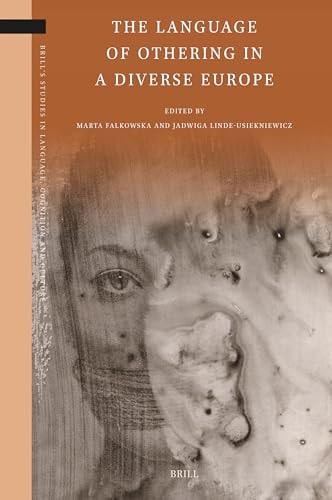
The Language Of Othering In A Diverse Europe Dagmara Banasiak

  • SKU: BELL-238460492
The Language Of Othering In A Diverse Europe Dagmara Banasiak
$ 35.00 $ 45.00 (-22%)

4.8

54 reviews

The Language Of Othering In A Diverse Europe Dagmara Banasiak instant download after payment.

Publisher: Brill
File Extension: PDF
File size: 7.92 MB
Pages: 370
Author: Dagmara Banasiak, Marta Chojnacka-Kuraś, Marta Falkowska, Jadranka Gvozdanovic, Milena Hebal-Jezierska, Agnieszka Karlińska, Anna Kolos, Marie Kopřivová, Marek Laziński, Jadwiga Linde-Usiekniewicz, Agnieszka Mikolajczuk, Iva Petrak, Jiří Rejzek, etc
ISBN: 9789004739116, 9789004743229, 9004739114, 9004743227
Language: English
Year: 2025
Volume: 44

Product desciption

The Language Of Othering In A Diverse Europe Dagmara Banasiak by Dagmara Banasiak, Marta Chojnacka-kuraś, Marta Falkowska, Jadranka Gvozdanovic, Milena Hebal-jezierska, Agnieszka Karlińska, Anna Kolos, Marie Kopřivová, Marek Laziński, Jadwiga Linde-usiekniewicz, Agnieszka Mikolajczuk, Iva Petrak, Jiří Rejzek, Etc 9789004739116, 9789004743229, 9004739114, 9004743227 instant download after payment.

This book explores how language is used to create division and discrimination in diverse European societies by emphasizing differences in ethnicity, race, national identity, beliefs, or appearance. The authors analyze how public discourse--particularly in political and media narratives--shapes and reinforces an "us vs. them" mindset. 
-
They examine words and expressions that denigrate or marginalize specific groups in Polish, German, Czech, Slovak, and Croatian, and observe how certain communities are also reclaiming terms that were once hurtful. The analyses of linguistic strategies employed in the process of othering demonstrate that the concept of othering can be effectively applied to linguistic data.