Most ebook files are in PDF format, so you can easily read them using various software such as Foxit Reader or directly on the Google Chrome browser.
Some ebook files are released by publishers in other formats such as .awz, .mobi, .epub, .fb2, etc. You may need to install specific software to read these formats on mobile/PC, such as Calibre.
Please read the tutorial at this link: https://ebookbell.com/faq
We offer FREE conversion to the popular formats you request; however, this may take some time. Therefore, right after payment, please email us, and we will try to provide the service as quickly as possible.
For some exceptional file formats or broken links (if any), please refrain from opening any disputes. Instead, email us first, and we will try to assist within a maximum of 6 hours.
EbookBell Team
4.1
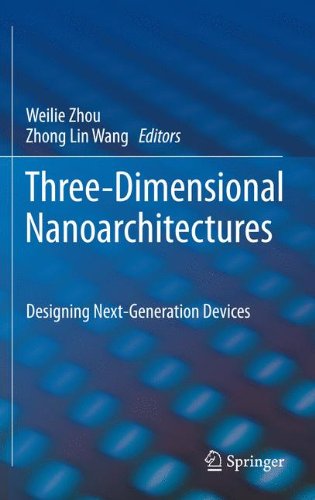
20 reviewsDevices built from three-dimensional nanoarchitectures offer a number of advantages over those based on thin-film technology, such as larger surface area to enhance the sensitivity of sensors, to collect more sunlight to improve the efficiency of solar cells, and to supply higher density emitters for increased resolution in flat panel displays. Three-dimensional nanoscale assembly has already been used to generate many prototypes of devices and sensors, including piezoelectric nanogenerators based on ZnO nanowire arrays, photovoltaic devices based on silicon nanowire array p-n junctions, and highly sensitive gas sensors based on metal oxide nanowire arrays among others. Three-Dimensional Nanoarchitectures: Designing Next-Generation Devices describes state-of-the-art synthesis, integration, and design strategies used to create three-dimensional nanoarchitectures for functional nanodevice applications. With a focus on synthesis and fabrication methods for three-dimensional nanostructure assembly and construction, coverage includes resonators, nanophotonics, sensors, supercapacitors, solar cells, and more. This book is an essential reference for a broad audience of researchers in materials science, chemistry, physics, and electrical engineering who want the latest information on synthesis routes and assembly methods. Schematics of device integration and mechanisms as well as plots of measurement data are included.