Most ebook files are in PDF format, so you can easily read them using various software such as Foxit Reader or directly on the Google Chrome browser.
Some ebook files are released by publishers in other formats such as .awz, .mobi, .epub, .fb2, etc. You may need to install specific software to read these formats on mobile/PC, such as Calibre.
Please read the tutorial at this link: https://ebookbell.com/faq
We offer FREE conversion to the popular formats you request; however, this may take some time. Therefore, right after payment, please email us, and we will try to provide the service as quickly as possible.
For some exceptional file formats or broken links (if any), please refrain from opening any disputes. Instead, email us first, and we will try to assist within a maximum of 6 hours.
EbookBell Team
5.0
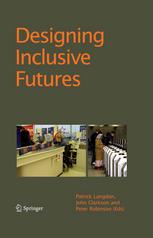
88 reviewsDesigning Inclusive Futures reflects the need to explore, in a coherent way, the issues and practicalities that lie behind design that is intended to extend our active future lives. This encompasses design for inclusion in daily life at home but also extends to the workplace and for products within these contexts. For example, given trends in employment sector growth, skills requirements, labour supply and demographic change, there is a need to predict the critical areas where individual capabilities are mismatched with the physical, social and organisational demands of work. This mismatch, which can be addressed within the domain of inclusive design, is pervasively linked to real artefacts in workspaces and their intersection with the health factors that relate to ageing. This book is the result of the fourth CWUAAT workshop held in Cambridge, England in April 2008.
Contributions address the following themes:
• Understanding Users
• Inclusive Design
• Computer Access and New Technologies
• Assistive Technology for Working and Daily Living Environments
• Inclusive Environments
The nature of the contributions reflect a sample of the work of leading national and international researchers in the fields of Inclusive Design, Ergonomics, Universal Access, and Assistive and Rehabilitative Technology. There have been significant contributions from researchers in architecture, social housing provision, and apparel and fashion design, reflecting the need to understand the wider social and economic context of inclusive and assistive technology design.