Most ebook files are in PDF format, so you can easily read them using various software such as Foxit Reader or directly on the Google Chrome browser.
Some ebook files are released by publishers in other formats such as .awz, .mobi, .epub, .fb2, etc. You may need to install specific software to read these formats on mobile/PC, such as Calibre.
Please read the tutorial at this link: https://ebookbell.com/faq
We offer FREE conversion to the popular formats you request; however, this may take some time. Therefore, right after payment, please email us, and we will try to provide the service as quickly as possible.
For some exceptional file formats or broken links (if any), please refrain from opening any disputes. Instead, email us first, and we will try to assist within a maximum of 6 hours.
EbookBell Team
0.0
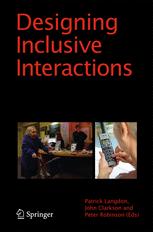
0 reviewsDesigning Inclusive Interactions responds to the recent changes in the research landscapes in the fields of Human Computer Interaction, Computer Science, and Healthcare as a result of new technology and innovation. Research into accessibility for interface design has always represented an unconventional, multi-disciplinary arena of pragmatic disciplines, such as experimental psychology, engineering design, and rehabilitation practice. It has moved from isolated activities in disparate fields to the more interdisciplinary perspective evident today in areas such as healthcare and inclusive design. As a result of this, there is now a need for the transfer of knowledge and techniques from inclusive design research into the wider community. This book is divided into five areas: • Understanding Users for Inclusive Design • Measuring Inclusion • Inclusive Interaction • Assistive Technology • Inclusion and Healthcare The papers were selected by reference to the peer assessments of an international panel of reviewers from many key disciplines such as computer science, assistive technology, engineering and product design. This book represents a sample of leading national and international research in the fields of inclusive design, universal access, and assistive and rehabilitative technology. We hope that this will encourage inter-disciplinary research leading to better designs, effectively reducing exclusion and difficulty, in the workplace, at home and at leisure.